
Healthcare / Renovation
TESH Nsukka
Nsukka, Enugu, Nigeria
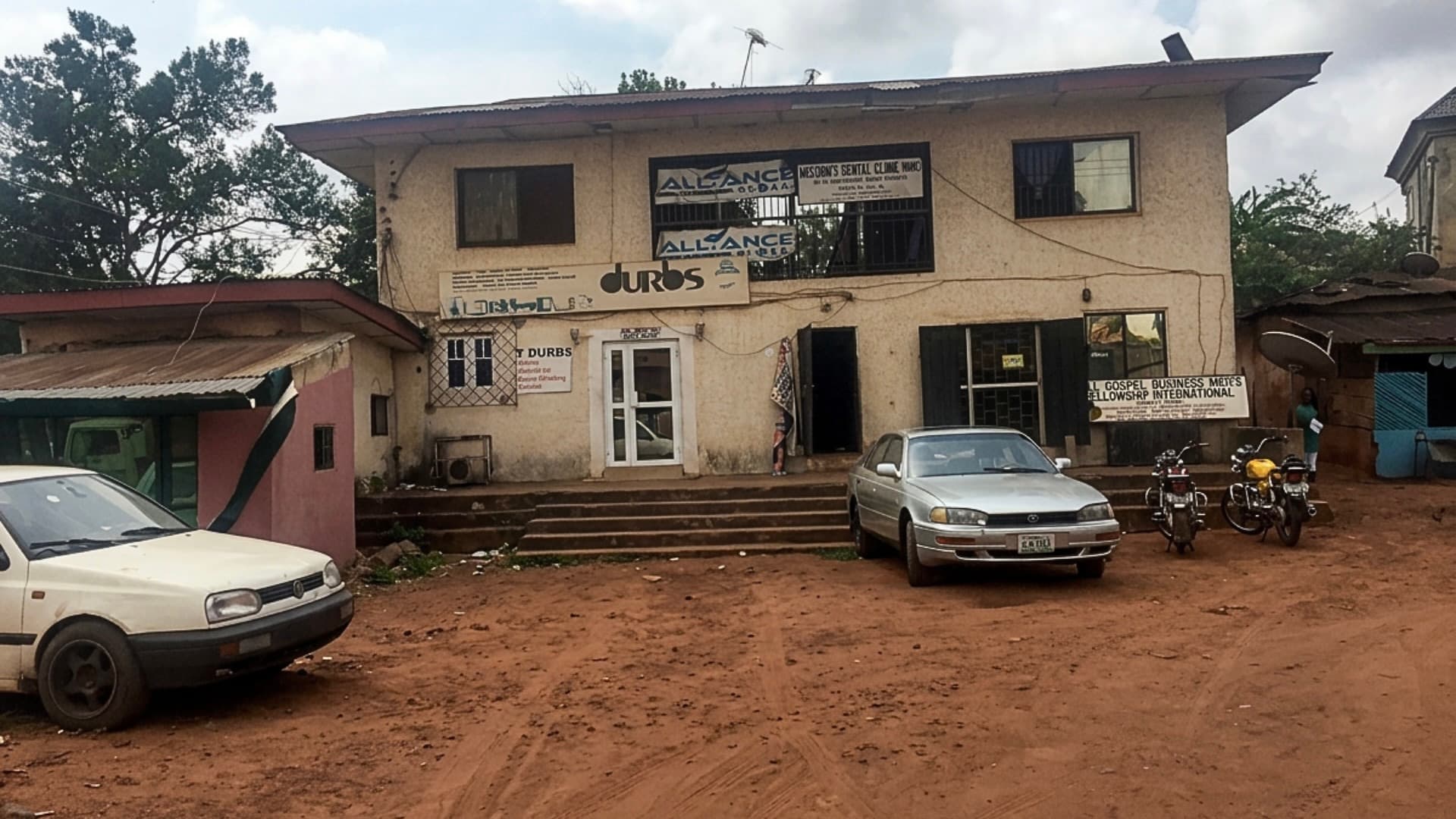
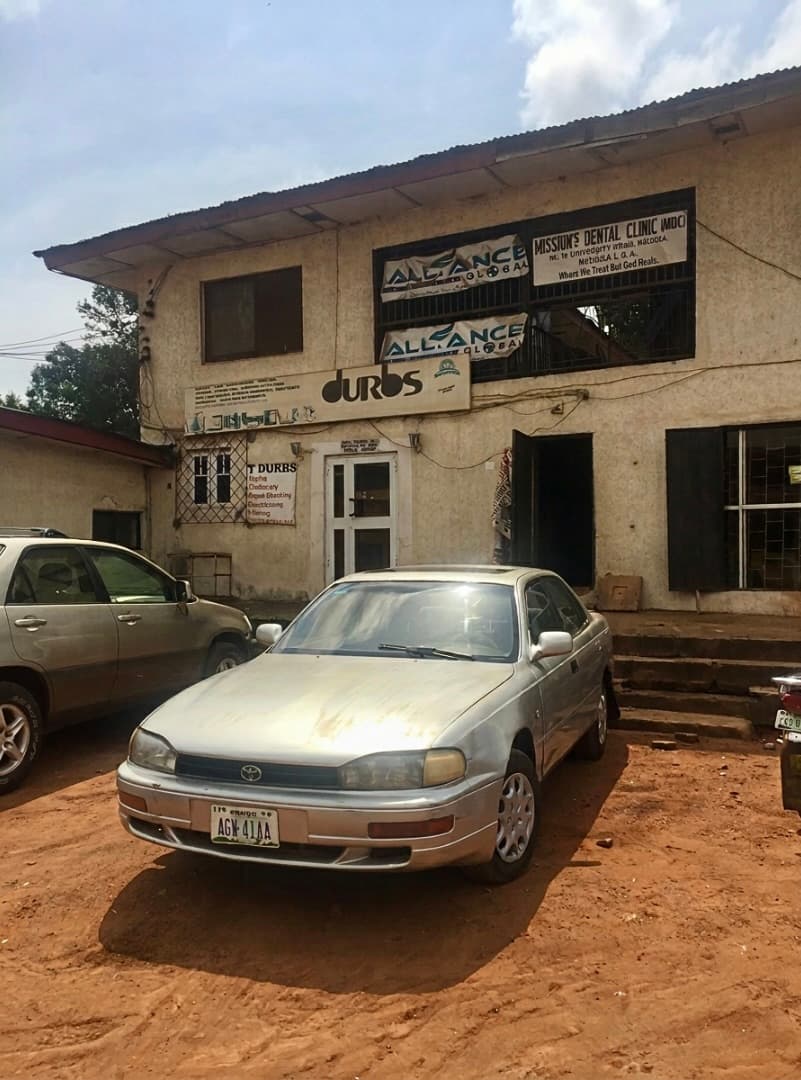
TESH Nsukka began as a dilapidated mixed-use building, reimagined into a fully functional eye hospital serving a previously underserved region. As the first eye hospital in Nsukka, the project addresses a critical gap in access to care. Prior to its completion, residents traveled long distances, often as far as Kano, to receive basic eye treatment. Today, the hospital provides consultations, medication, glasses, and surgical services within the community. Beyond function, the project explores how architecture can become a tool for access, dignity, and healing.
The Brief
The client's vision was clear. To create a hospital that does not feel like one. She wanted a space that was warm, inviting, and supportive of healing. A departure from the typical clinical environment defined by stark white finishes and cold tones. More importantly, she wanted a space that would evoke a sense of wonder. A place that would make users pause and say, wow.
The Transformation
From what was, to what could be.
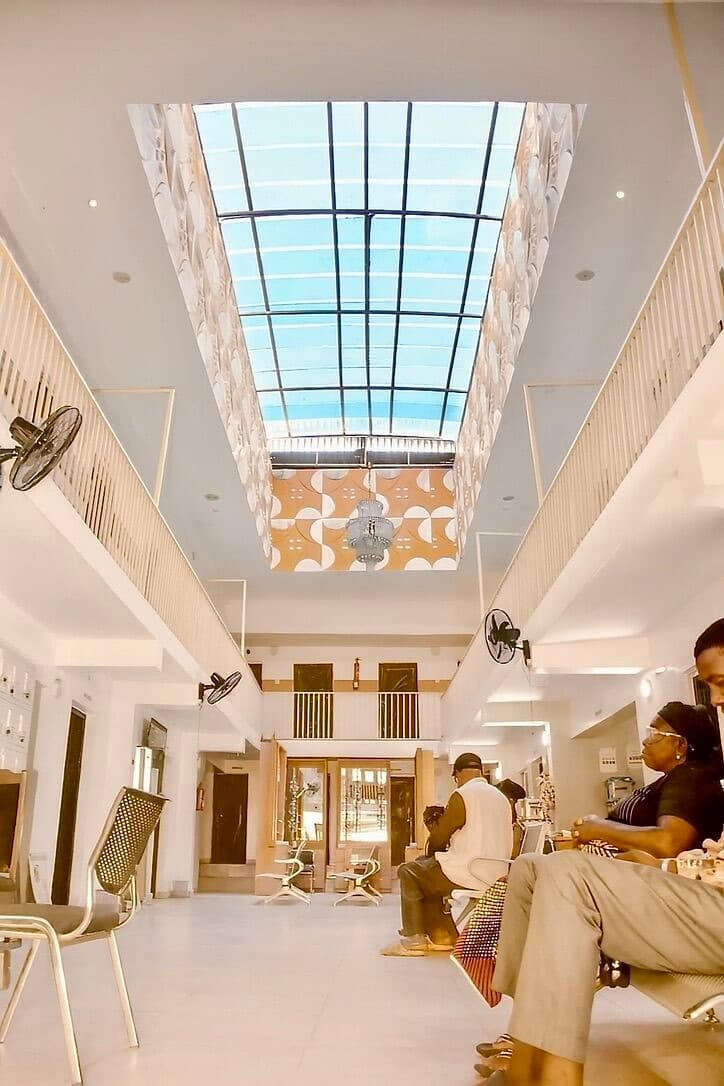
From derelict courtyard to light-filled atrium.
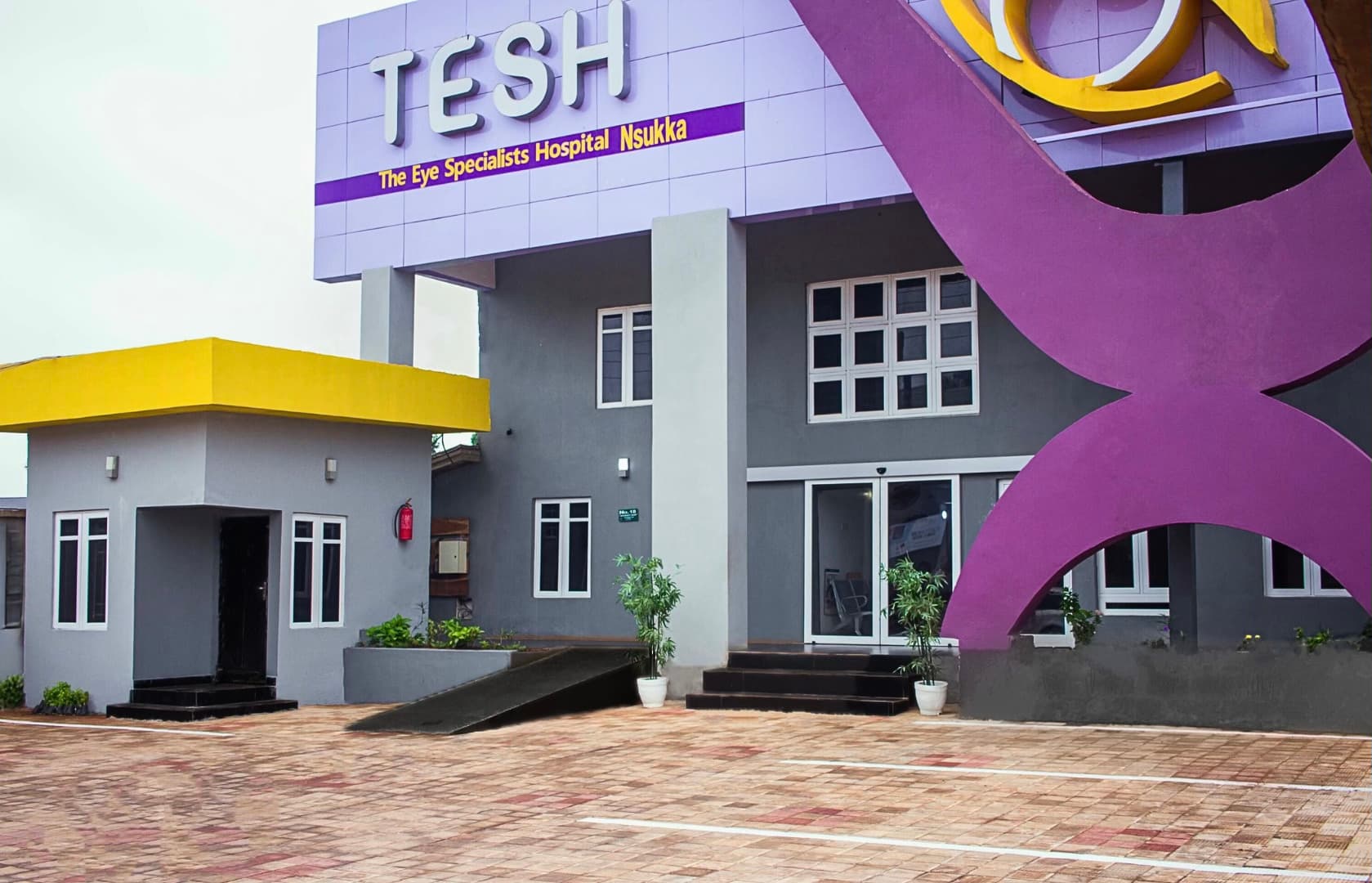
Exterior facade, reimagined.
Design Intent
"How can architecture extend access to healthcare while improving the quality of care itself? Guided by the client's vision, the response moved beyond function into experience. The hospital was conceived as a therapeutic environment where light, air, color, and space work together to support healing. Rather than replicating conventional hospital design, the project reimagines healthcare as something warm, human, and uplifting. This was not designed to feel like a hospital. It was designed to feel like care."
Energy Independence
The hospital operates on a fully off-grid solar inverter system, independent of the national grid. A 15kVA inverter with a 30kW battery setup generates approximately 100kWh daily, with consumption of 50 to 60kWh. A smart system prioritizes critical medical equipment and lighting when battery drops below 40 percent, achieving 95 percent system uptime.
Climate Response
A central atrium elevated above roof level allows hot air to rise and escape. Perimeter openings enable continuous airflow, while a barrel-shaped roof improves insulation and thermal performance. Natural ventilation reduces system load by 20 percent, keeping the waiting area cool and comfortable without dependence on air-conditioning.
Material and Spatial Experience
The interiors shift away from the sterility of conventional hospitals. Pastel tones introduce warmth and calm. Natural light is prioritized across spaces. Spatial openness improves comfort and reduces stress. Patients often report feeling better simply by being in the space.
Site Response
A 6 meter setback creates organized on-site and off-site parking. An earth pit system manages stormwater drainage across the site, reinforced and sloped to direct water efficiently. These interventions resolve constraints while maintaining functionality and clarity of movement.
Identity and Community Impact
External artwork symbolizes the eye and access to vision. Vibrant purple and yellow reflect the hospital's identity and a sense of renewal. For a community that previously lacked access to eye care, the project represents a meaningful shift.
The Experience
Patients often report feeling better simply by being in the space. The waiting area is calm, light-filled, and naturally ventilated. Colors are warm. Materials feel human. Nothing announces itself as clinical. For a community that traveled hours for basic eye care, the building itself becomes part of the treatment, a signal that they deserve this quality of environment.
Architecture is not just about creating enclosures. It is about shaping environments that make life easier, healthier, and more dignified.
Key Features
- •100% solar energy, independent of the national electricity grid
- •400% increase in patient visits
- •95% reduction in diesel consumption
- •8 million naira saved annually in energy costs
- •48 million naira saved to date
- •32 tonnes of CO₂ emissions reduced annually
Project Impact
- •100% solar energy power generation; independent of the national electricity grid
- •400% increase in patient visits
- •95% reduction in diesel consumption
- •8 million naira saved annually in energy costs
- •48 million naira saved to date
- •32 tonnes of CO₂ emissions reduced annually
The Results
TESH Nsukka demonstrates that architecture can go beyond shelter. It can enable access. It can improve systems. It can support healing. More importantly, it can change how care is experienced.